Gestational Diabetes
Gestational diabetes mellitus (GDM) is a form of diabetes that occurs in pregnancy that can cause serious pregnancy complications if not controlled appropriately. Dr. Neetu K. Sodhi specializes in the management of GDM and serves the women of Tarzana, the San Fernando Valley as well as the greater Los Angeles area.
Gestational Diabetes
Gestational diabetes mellitus (GDM) is a form of diabetes that occurs in pregnancy.
Like diabetes, GDM results in poorly regulated blood sugar levels, therefore, it becomes crucial to monitor sugar intake and modify dietary carbohydrate intake. Most women with controlled blood sugar deliver healthy babies without complications.
Onset of GDM is usually around 24 weeks; at this time, vital organs have been formed and the baby is growing. Because structures are already formed at this time, GDM does not pose the same risk for birth defects as pre-pregnancy diabetes. If not controlled or treated, however, GDM can lead to macrosomia because glucose crosses the placenta and excess glucose leads to an over-sized baby. Babies with macrosomia may have breathing problems and are at higher risk for type II diabetes.
The American College of Obstetricians and Gynecologists recommends performing a one-hour blood glucose challenge test to screen for gestational diabetes in pregnant women between 24 and 28 weeks of pregnancy. You will fast 8 hours prior to coming to the office and your fasting blood glucose level will be checked. You will drink a 8 ounce glucose solution and your glucose blood level will be checked again in an hour. A normal blood glucose level, after 1 hour, is lower than 140 mg/dL. A glucose level above this value is considered an impaired glucose tolerance, and a three-hour glucose challenge test will be recommended.
Nutrition for GDM
Below are some examples of carbohydrates in food:
Fruit & fruit juice*
Grains, cereal, pasta
Any baked goods- bread, pastries
Starchy vegetables
Dairy such as milk and yogurt
Dairy such as milk and yogurt
Fruits are an important part of any nutritious diet. It is recommended that pregnant women have one to three servings of fruit daily.A single serving of fruit is:
One small piece of fruit (i.e. a small orange, a small apple), or
Half of a larger piece of fruit (i.e. half of a banana, half of a grapefruit, etc), or
A half-cup of mixed fruit (mixed berries, grapes, chopped bananas, etc)
Glycemic Index
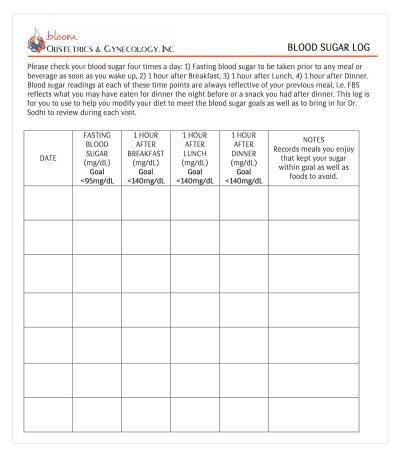
Track your Blood Sugar